Adult Coloring Books That Are Cozy, Not Complicated
Ages 10+ (kids, teens and adults)
A cozy adult coloring book should make it easy to begin, not make you feel you need a full collection of professional art supplies. If you're looking for a quiet creative activity, the easiest page to enjoy may be a room, a curious animal or a simple character scene with space to add color at your own pace.
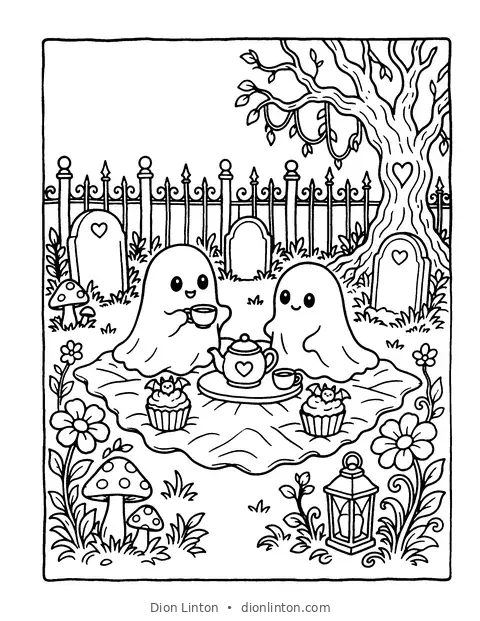
Adult coloring books span many styles. Some are packed with tiny patterns; others use large shapes and bold outlines. A book can be aimed at adults because of its visual style and themes without requiring expert coloring skills. The trick is choosing a style you'll want to come back to.
Choose the page before you choose the book
Before buying a cozy coloring book, look at real interior samples. Covers often have vivid colors and finished artwork, but it's the black-and-white interior that determines your experience. Think about whether you prefer a large central character, an atmospheric room, a repeating pattern or a full scene.
If you enjoy short coloring sessions, a design with obvious, separated shapes may be more appealing than one with hundreds of tiny sections. If you like spending an evening on one illustration, a more detailed page might be exactly right. Neither approach is superior; they serve different moods and available time.
Practical tip: Open a preview and imagine coloring it with only the three materials you actually own. If you immediately feel you need new pens or advanced shading skills, consider a simpler page first.
What 'cozy' means in a coloring book
Cozy doesn't have to mean only sunshine, cottages and cheerful animals. A little gothic room, a sleepy bat with a cup, a black cat curled among books or a ghost at a tea party can feel cozy too. What matters is the sense of a small, inviting world that you're happy to spend time with.
Moonlit & Macabre explores that crossover. It has a recurring gothic-cute cast across 30 scenes, made for Ages 10+ (kids, teens and adults); it isn't only for little kids. All characters are original. The illustrations were made with AI image tools, then cleaned up by hand and edited for print.
A recurring cast can make a collection feel connected. Instead of opening a book of unrelated patterns, you meet familiar characters in different settings. That's especially appealing if you enjoy inventing stories about what happens before or after a scene.
The ten-minute coloring habit that reduces decision fatigue
Many adults give up on relaxing coloring not because the designs are bad, but because getting started feels like another task. The simplest fix is a small routine with a clear stopping point.
Minute 0–2: Choose. Pick a scene with one obvious focal object, not necessarily the most beautiful illustration. Put only one coloring tool type on the table.
Minute 2–7: Start. Color the focal object and one smaller nearby detail. Avoid switching supplies repeatedly to chase a perfect effect.
Minute 7–10: Close. Decide whether to continue, take a photo, or leave a bookmark at your stopping point. The session counts even if the page remains unfinished.
Tip one: Select tomorrow's page before putting today's supplies away. That removes one decision from the next session.
Tip two: Evaluate the book by how easy it is to return to, not by whether every page can be finished in one sitting. If you dread the density of the design, choose a simpler illustration or a smaller focal area.
Worked example: On a cozy spooky scene, finish only the mug and the main character's face in ten minutes. Return later for the environment. The objective is a low-friction creative break, not flawless technique.
Markers, pencils or crayons?
Colored pencils are versatile and easy to control for small features. Crayons are simple and familiar, particularly for broad areas. Markers produce strong, even color but can show streaks or pass through the paper depending on the ink and page stock. You can use inexpensive tools to find out what style you enjoy.
For a printed book, put a clean protective sheet behind the page. If the book uses one-sided illustrations, the blank reverse may reduce interference with other designs, but it doesn't make the paper resistant to every marker. Our Moonlit and Dino books are laid out that way too — one picture per page with a blank back, like ours. For a PDF, you can choose your own paper and test before printing more copies.
There's no need to buy a large set of markers to enjoy your first cozy coloring page. Try the smallest sensible set and expand only if you genuinely want more colors.
Printable or paperback: which is easier?
A printable PDF is useful when you want to repeat a design, choose your own paper and work with a printer you already use. A paperback is convenient when you want one complete object to open and use without printing. A hardcover may appeal as a gift or keepsake when an actual edition is available.
Check the specific product page before buying: paper and page counts, included bonus files, and shipping depend on format. If you are using a printable, check the permission for personal versus group use. If you're choosing a physical edition as a gift, verify the current availability and delivery estimate rather than relying on an old promotion.
Make coloring easy to return to
Keep a small pouch with the few supplies you use most. Store unfinished printouts in one folder, or mark the page you're working on in a physical book. The next time you sit down, you won't have to make all the setup decisions again.
Another idea is to keep a 'palette note' beside each finished page: write the names of two or three colors you liked together. You can reuse that combination in another scene or intentionally try the opposite next time. It's a simple way to build preferences without turning coloring into homework.
Frequently asked questions
Are adult coloring books supposed to be difficult?
No. Many adult coloring books use bold, approachable illustrations. Choose actual interior art that fits your interest rather than assuming age-based marketing means complex designs.
Are cozy coloring book pages always cottage-themed?
Not at all. Cozy can describe gentle woodland scenes, kitchens, rooms and even spooky-cute gothic characters. The atmosphere and coloring choices matter more than one setting.
Can I use a cozy coloring book PDF on regular printer paper?
Usually, if the file is made for home printing, but paper quality affects the experience. Test one page and place a backing sheet under markers.
Is this suitable for a teenager?
Check the publisher's age guidance. Moonlit & Macabre is designed for Ages 10+ (kids, teens and adults); preview the artwork and use parental judgment for individual suitability.
Does a cozy coloring book replace other ways of relaxing?
It can be an enjoyable creative hobby, but we aren't claiming a medical treatment or measured mental-health outcome. Choose it because you enjoy the activity.
Find a cozy-spooky book that fits
If your ideal coloring book includes friendly ghosts, black cats and a gothic-cute cast, see Moonlit & Macabre for genuine preview pages and the current available editions.
Your next step: Moonlit & Macabre
- Look inside real pages on the Moonlit & Macabre page.
- Get the printable ZIP: instant download, both US Letter and A4 included, so it prints anywhere.
- Print one test page at 100% (Actual Size) on the paper you love, then pick tonight's scene.
What you get in the printable:
- 47 printable pages with 30 spooky-cute scenes
- Both US Letter and A4 sizes in one download
- 5 create-your-own goth character pages
- A 6-tile wall poster that tapes into one 22 x 20 in mural
- 6 phone wallpapers and a sheet of 15 stickers
Get the printable on Payhip, CA$12.99
Prefer a book? The paperback and hardcover are on the Moonlit & Macabre page. For Ages 10+ (kids, teens and adults).
Printing for a class or club? Classroom Licence (CA$29.99) or School-Wide Licence (CA$99): one-time purchases that never expire. Sleepover? Each guest gets their own copy, or you all colour one printed copy together.
All characters are original. The illustrations were made with AI image tools, then cleaned up and edited for print. Questions? support@dionlinton.com